
How are ducts professionally cleaned?
Done properly, commercial duct cleaning is a controlled engineering process with measurement at both ends of it. Here is what actually happens on site.
How are ducts professionally cleaned?
1. Survey and assessment
The system is inspected internally, usually with remote cameras where access is limited. Contamination levels are measured, system layout is recorded against drawings or an asset register, and access provision is assessed. This produces the scope: what will be cleaned, by what method, and where panels need to be installed first.
2. Access provision
Most systems built more than a couple of decades ago have inadequate access. Panels are installed at spacing consistent with industry guidance, positioned so every section can be reached and later re-inspected. This is done once and benefits every future clean — it is an investment rather than a cost of this visit alone.
3. Containment and isolation
The section being worked on is isolated from the rest of the system and from the occupied space. Work areas are sheeted, terminals are sealed and negative pressure is applied to the duct run so dislodged material travels into filtration rather than into the building.
4. Mechanical cleaning under negative pressure
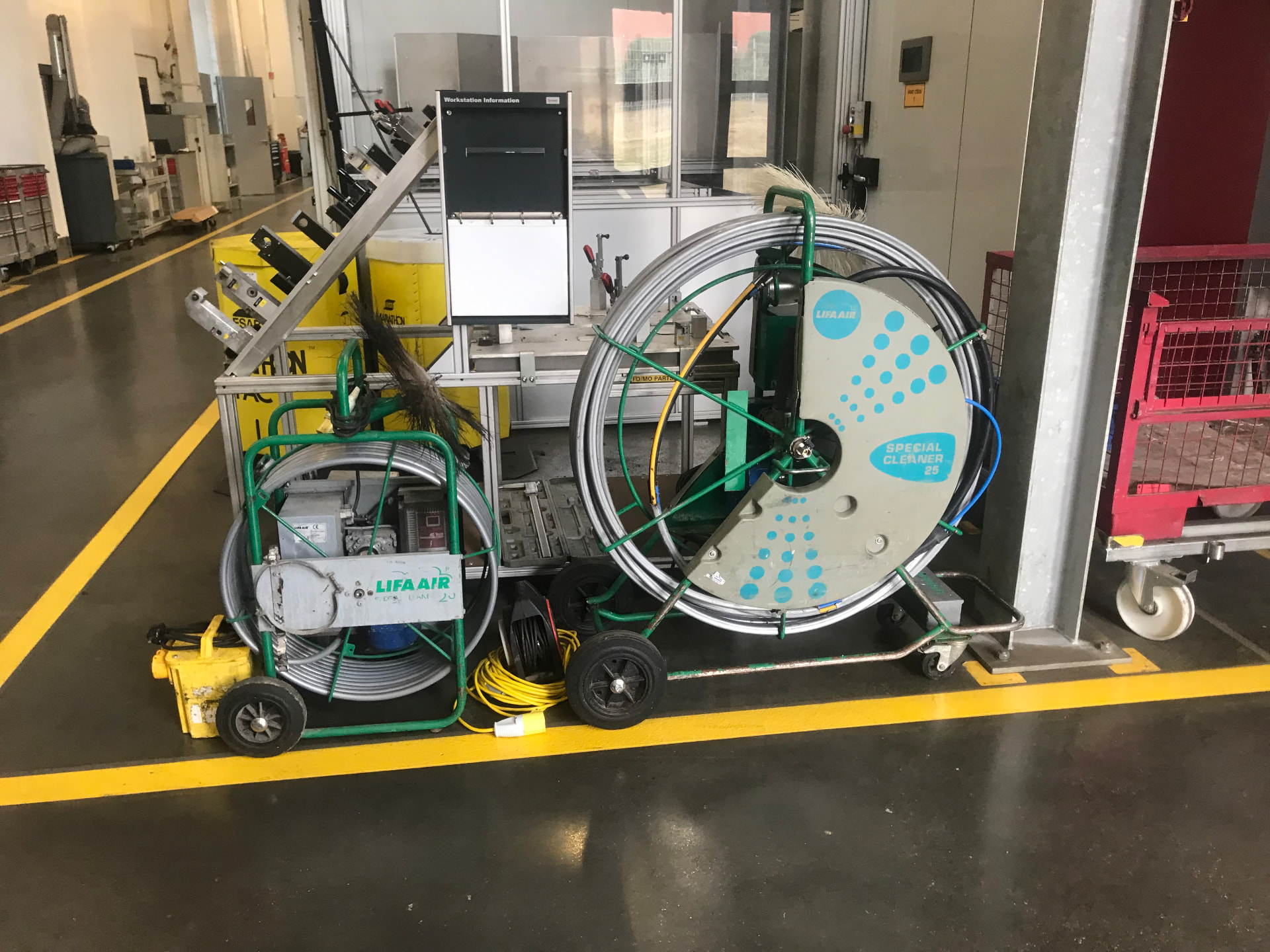
Rotary brushes, compressed air whips and agitation tools appropriate to the duct material and contamination are used to dislodge deposits, while a high-capacity extraction unit fitted with HEPA filtration holds the duct under negative pressure and removes the debris. Method is matched to the system: internally lined ductwork, flexible connections and fragile older sections all need different treatment from rigid galvanised duct.
5. Ancillary plant
- Air handling unit internals, coils, drain trays and plenum surfaces
- Fan housings and impellers, which carry a surprising proportion of total deposit
- Attenuators, dampers and volume control devices
- Diffusers, grilles and terminal units, usually removed and washed
6. Verification and reporting
Post-clean condition is verified rather than asserted — by measurement where the method allows, supported by photographs at identified points. The report ties results to asset references, declares anything that could not be accessed, separates remedial recommendations from completed work and sets a recommended next inspection date.
Continue reading
Services and guidance related to this article.
Request a free site survey
Tell us about your site and a Deduct engineer will arrange a no-obligation survey, scope of works and written quotation.