
LEV System Cleaning & Blockage Clearance
Local exhaust ventilation only protects people while it still captures at source. Deduct cleans hoods, ducts and collection systems to restore capture velocity — and clears the blockages that stop production.
- Capture velocity restored and verified
- Blockage investigation and clearance
- Containment for hazardous residues
- Supports COSHH and examination outcomes
- COSHH
- Duty support
- 14 months
- Typical TExT interval
- Urgent
- Blockage response
- UK-wide
- Multi-site delivery
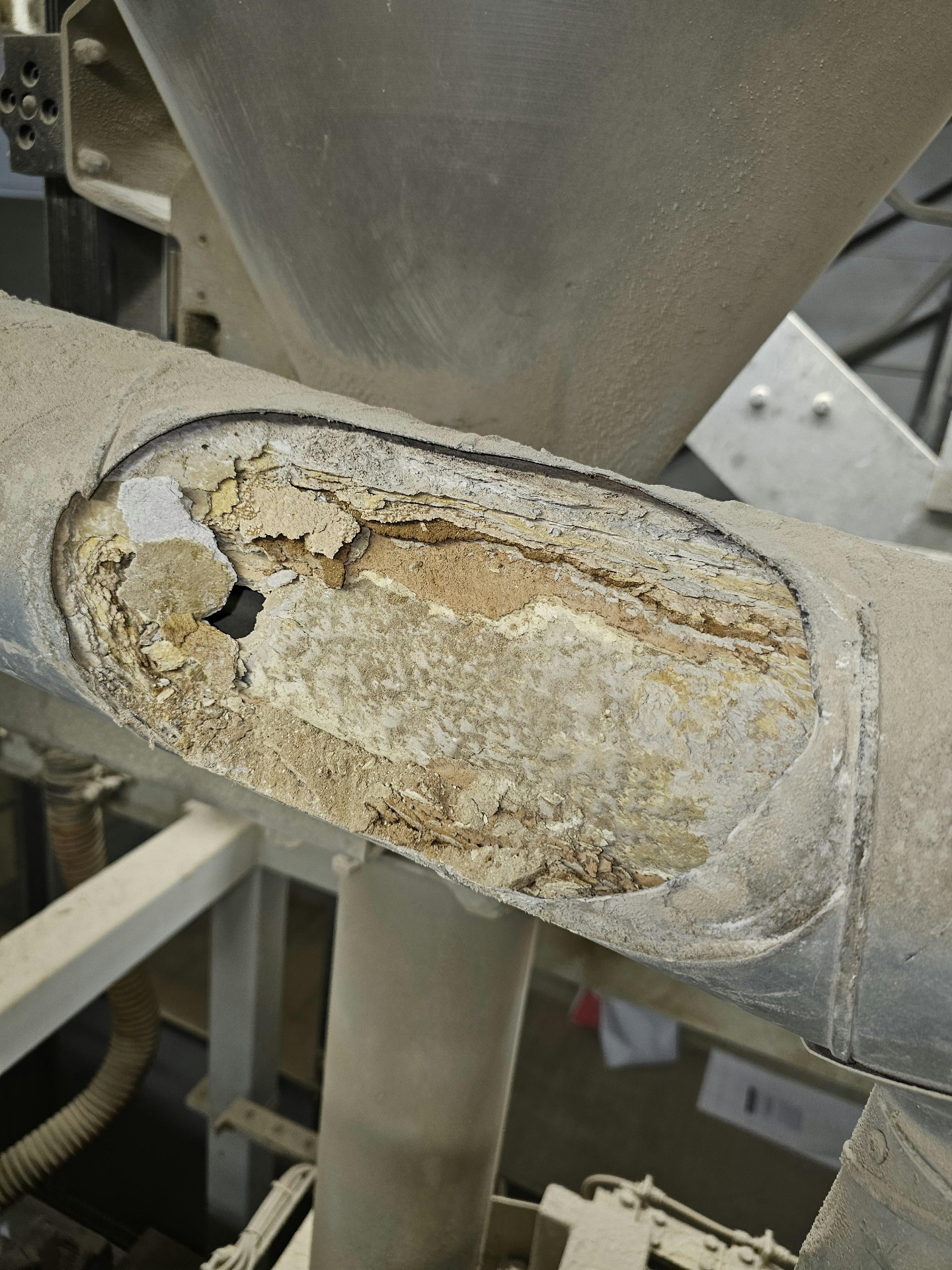
When extraction stops working, production stops too
We are regularly called to sites where extraction has degraded gradually until an operator raises it — or suddenly, when a line has to be stopped.
Our approach is to investigate first. Locating the restriction avoids stripping an entire system to solve a problem confined to one duct run, and it gives the maintenance team a clear picture of what actually failed.
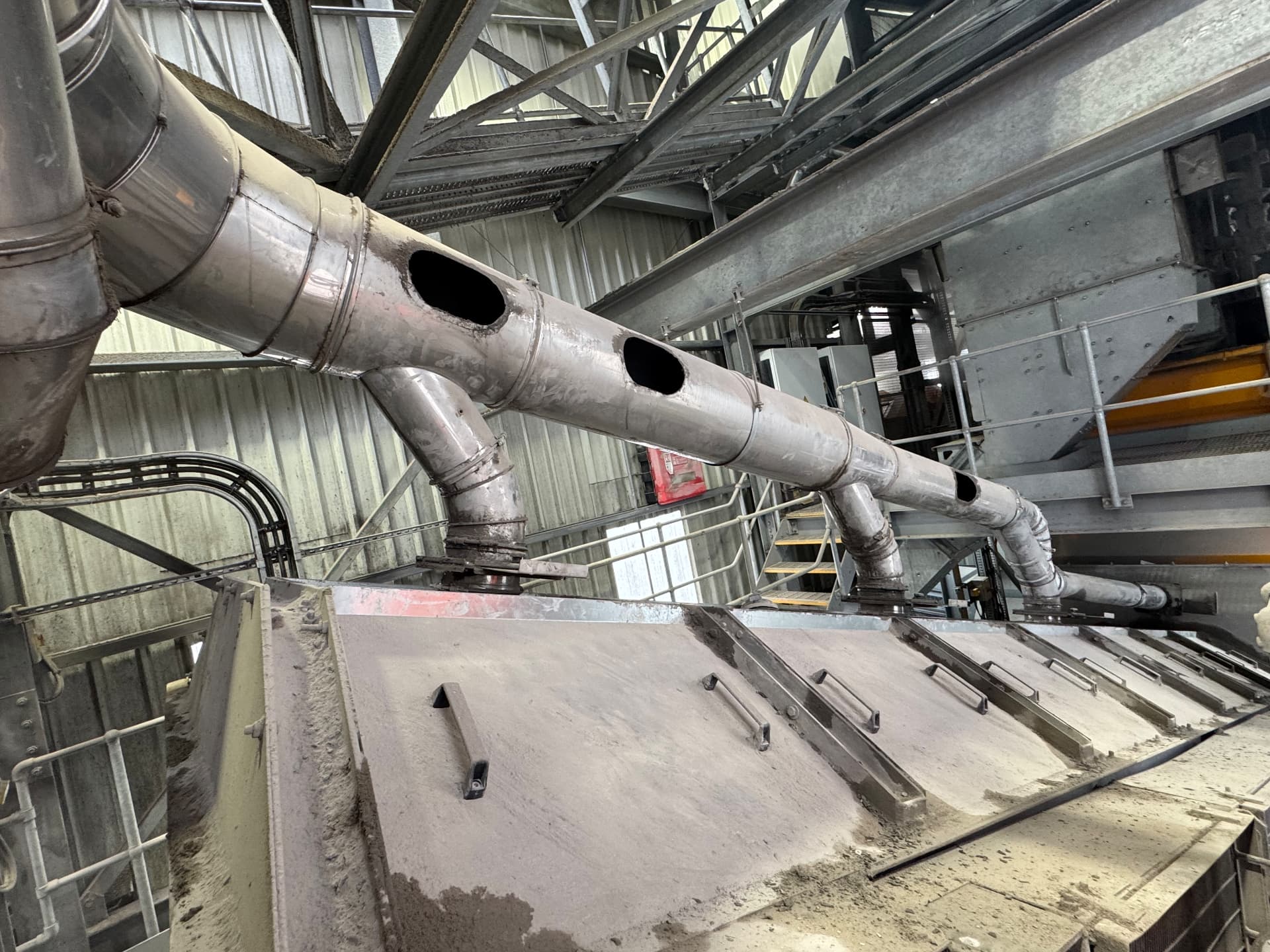
Cleaning is delivered with containment appropriate to the contaminant, using brushing, air lancing and negative-pressure capture. Where systems have no access provision we install panels so future cleaning does not require dismantling.
Afterwards we verify and record the condition so the report supports both your COSHH file and the next thorough examination.
What we clean
The full capture-to-discharge path of a local exhaust ventilation system.
Capture hoods & enclosures
Hoods, booths and enclosures cleaned so capture happens at the point of generation.
Branch & main ductwork
Deposit removal through the branch and main runs to restore designed airflow.
Dust & fume collection
Collection units, cyclones and filter housings cleaned and inspected.
Fans & discharge
Impellers, housings and discharge stacks cleaned to remove imbalance and restore volume.
Blockage clearance
Targeted investigation and clearance where a system has failed in service.
Access provision
Access panel survey and installation so the system can be cleaned properly in future.
How LEV cleaning is delivered
Planned around the process, the contaminant and the shift pattern.
- 01
Assess
System reviewed, contaminant identified and restrictions located.
- 02
Plan
Containment, PPE, isolation and waste route agreed in the method statement.
- 03
Access
Panels installed and high-level or confined-space access arranged.
- 04
Clean
Systematic cleaning under containment with controlled waste removal.
- 05
Verify
Condition and airflow verified, documented and reported with recommendations.
Cleaning that supports the examination, not just the paperwork
Our reports are written to sit alongside your LEV examination records and COSHH assessments.
- Investigation before wholesale stripping of systems
- Containment matched to the contaminant
- Waste transfer documentation issued on completion
- Access panels installed so future cleaning is straightforward
- Urgent mobilisation where production has stopped
- Confined-space and high-level capability in house
- Experience across engineering, food, wood and process industries
- Reports that support COSHH files and thorough examinations
Frequently asked questions
Questions from EHS managers, engineering leads and LEV examiners.
- What is LEV and why does it need cleaning?
- Local exhaust ventilation captures dust, fume, mist or vapour at source to protect workers. Deposits inside hoods and ductwork reduce capture velocity, so the system stops removing contaminant at the point it is generated even though the fan is still running.
- Is LEV cleaning the same as a thorough examination and test?
- No. A thorough examination and test (TExT) under COSHH Regulation 9 assesses whether the system performs as designed, normally at least every 14 months. Cleaning is the corrective work that restores performance — the two are complementary, and cleaning is often what an examination recommends.
- How often should LEV systems be cleaned?
- It depends on the process and contaminant. High-dust and high-fume processes may need cleaning several times a year; lighter duties annually. Falling capture velocity or increasing fan load are the practical indicators.
- Can you clear a fully blocked LEV duct?
- Yes. We investigate to locate the restriction, install access where required, clear the blockage under containment and verify airflow afterwards. This is frequently urgent work where production has stopped.
- How is hazardous residue handled?
- Containment, PPE, filtration and disposal route are agreed in the method statement based on the contaminant, and waste transfer documentation is issued on completion.
Continue reading
Other Deduct services and guidance relevant to this work.
Industrial Ductwork Cleaning
Process extraction and factory ductwork cleaned around production.
Commercial Ductwork Cleaning
TR19-aligned cleaning, verification and reporting for supply and extract systems.
Pre & Post Clean Reporting
How our compliance documentation is structured.
Recent Projects
Completed ventilation hygiene works across UK sectors.
Contact the Team
Book a free site survey or ask a compliance question.
Sectors We Work In
Healthcare, commercial, industrial, marine and public sector estates.
Get your LEV system assessed
Whether capture has degraded or a duct has blocked entirely, we will investigate, clear and verify the system.
Request an LEV cleaning quotation
Tell us the process, contaminant and system layout and we will scope the works.
Prefer to talk it through? Call 0333 772 0089 or email hello@deductltd.co.uk.