
LEV cleaning and testing: how the two duties fit together
LEV thorough examination and testing is a statutory duty. LEV cleaning is not the same thing — but neglecting it is the most common reason systems fail examination.
LEV cleaning and testing: how the two duties fit together
The statutory position
Under the Control of Substances Hazardous to Health Regulations 2002, engineering controls provided to control exposure must be maintained in efficient working order and in good repair. Where LEV is used, it must be thoroughly examined and tested at suitable intervals — in most cases at least once every fourteen months, and more frequently for certain processes.
The examination is carried out by a competent person and produces a report that must be kept for at least five years. It assesses whether the system is still controlling exposure as intended.
Why cleaning is a separate matter
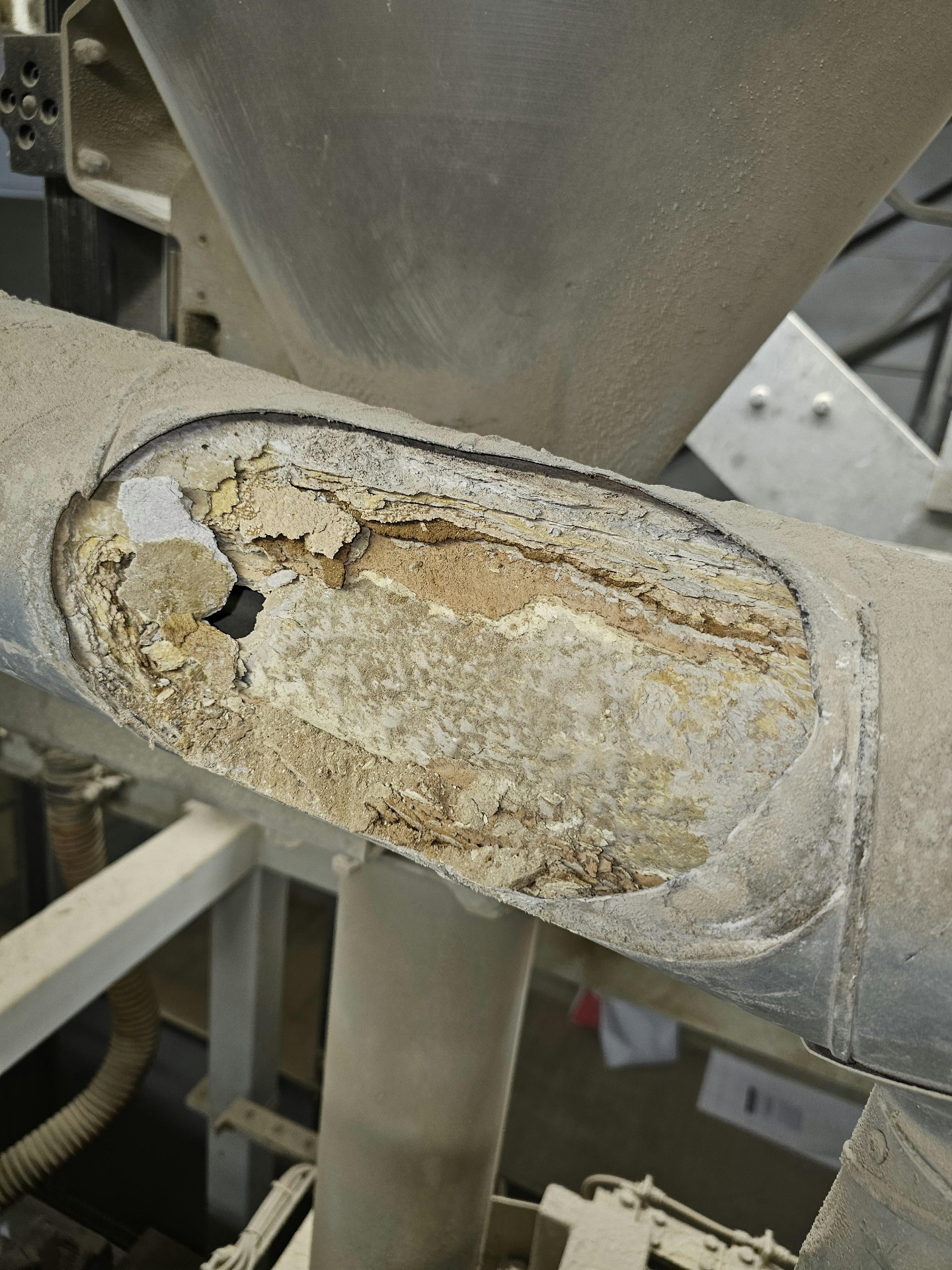
Thorough examination tells you whether the system is performing. Cleaning is one of the things that restores performance when it is not. An examination that records inadequate capture velocity at a hood is often diagnosing a duct run partially blocked with process residue, a loaded filter or a fan impeller carrying deposit.
Cleaning does not discharge the examination duty and should never be presented as doing so. Equally, an examination on its own does not fix anything.
How performance degrades
- Process dust, resin, fibre or fume residue narrowing the duct bore
- Deposit accumulating on fan impellers, unbalancing them and reducing output
- Blocked or bypassing filters increasing system resistance
- Damaged or disconnected flexible hoses at hood connections
- Extraction points added over time without rebalancing the system
A workable maintenance pattern
For most industrial systems: thorough examination at the statutory interval, cleaning at a frequency set by how quickly the process loads the system, and a visual check by the maintenance team between visits. Where a process is known to load quickly — woodworking, powder handling, welding fume, food and pharmaceutical dust — cleaning intervals are typically far shorter than the examination interval.
Scheduling cleaning shortly before examination is usually sensible: it gives the system its best chance of demonstrating compliant performance, and it means any remedial findings relate to the equipment rather than to accumulated dirt.
Common questions
- Does cleaning my LEV system count as thorough examination?
- No. They are separate duties. Cleaning restores performance; thorough examination and testing by a competent person assesses and records whether the system controls exposure adequately.
- How often should LEV ductwork be cleaned?
- It depends entirely on the process and loading rate. Some systems need attention quarterly; others hold condition for a year or more. Measured performance should set the interval.
Continue reading
Services and guidance related to this article.
Request a free site survey
Tell us about your site and a Deduct engineer will arrange a no-obligation survey, scope of works and written quotation.