
10 Dec How Often Should Kitchen Extraction Cleaning Be Carried Out?
Kitchen extraction system cleaning involves the removal of grease, oil and other buildup from hoods, ducts, filters, and fans to ensure safe and efficient operation. Without regular cleaning, these systems can quickly become clogged, increasing energy costs, reducing airflow and creating fire hazards.
In the UK, ventilation system cleaning standards are guided by TR19 regulations, which set out best practices for maintaining kitchen extraction systems. As these standards are widely recognised by insurers, a failure to comply could invalidate your insurance policy in the event of a fire. Complying with TR19 regulations not only keeps your kitchen compliant, it also demonstrates your commitment to the safety of your team and to professional operation.
Kitchen extraction cleaning frequency varies from business to business, dictated by the type of kitchen and its level of usage. High-volume commercial kitchens will require more regular cleaning than smaller or less frequently used facilities.
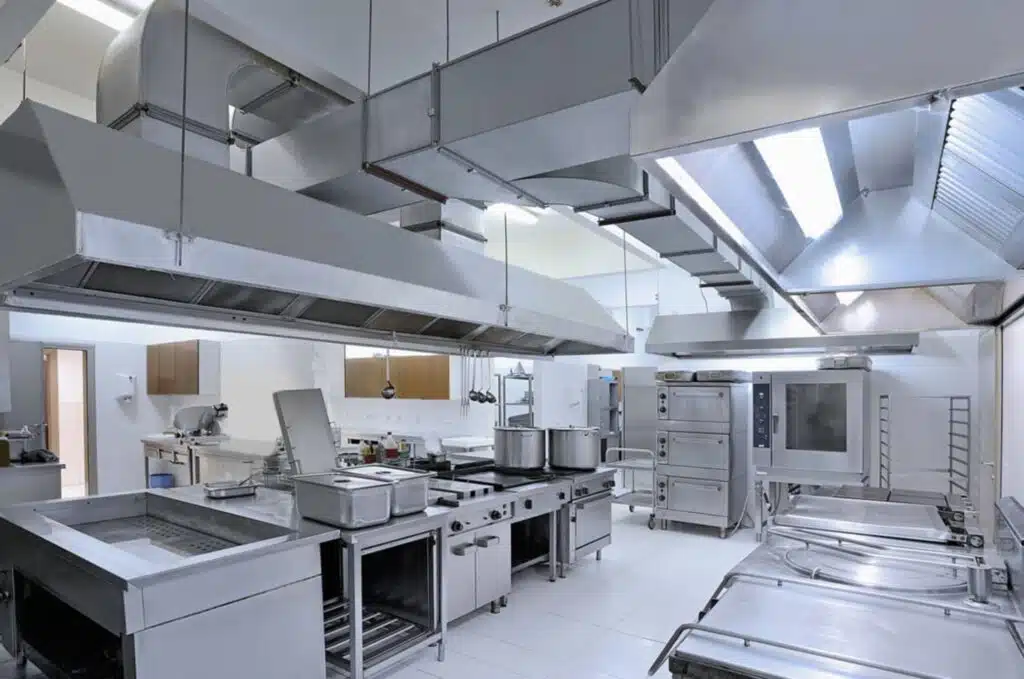
Why Regular Kitchen Extraction Cleaning is Essential
Regular kitchen extraction system cleaning is vital for maintaining fire safety, compliance and hygiene in any commercial kitchen.
Fire risks from grease build-up
Built-up grease and oil deposits are one of the biggest fire hazards in a commercial kitchen. Unclean systems can also harbour bacteria and odours that compromise hygiene standards as well as working conditions.
Compliance with TR19 standards
Failing to meet TR19 regulations, meanwhile, can put a commercial kitchen at risk of fines or even closure. Insurance is equally important. Most insurers require evidence of routine kitchen extraction system cleaning in line with TR19 regulations. Failing to produce these records in the event of a fire could invalidate your insurance, leaving you significantly out of pocket.
Factors That Influence Cleaning Frequency
Kitchen extraction cleaning frequency is not a one-size-fits-all approach: it depends on usage levels, the type of food being prepared, and your daily operating hours. Kitchens that produce a high volume of fried or grilled foods will naturally generate more grease and smoke than those preparing lighter meals, while kitchens open for longer periods will place greater strain on their extraction systems.
High-use kitchens (e.g., busy restaurants, takeaways)
These types of kitchens, producing high volumes of food and open for extended periods , require more frequent cleaning. These environments generate significant amounts of grease and airborne contaminants, which quickly accumulate in extraction systems. To reduce fire risk and stay compliant with TR19 standards, extraction systems in high-use kitchens typically need cleaning quarterly, and in some cases, even monthly.
Moderate and low-use kitchens (e.g., schools, offices, care homes)
Kitchens that prepare lighter meals or operate for fewer hours in the day – such as schools, offices and care homes – experience less grease buildup. A lower intensity of use means that kitchen extraction cleaning frequency can be annual or bi-annual. While a school canteen that operates only during term time will accumulate contaminants at a slower rate than a full-service restaurant, regular cleaning remains essential to maintain compliance, efficiency and safety.
Recommended Kitchen Extraction Cleaning Frequencies
Commercial kitchen extraction cleaning can be broken down into regular maintenance tasks that can be done in-house and professional TR19 cleaning and maintenance services.
Daily vs. weekly maintenance tasks
Several kitchen extraction system cleaning tasks can be undertaken daily or weekly to help keep systems running smoothly. These simple tasks include wiping filters, cleaning accessible hood surfaces and checking fans and ducts for visible buildup to prevent problems escalating.
Professional TR19 cleaning intervals
Professional cleaning in accordance with TR19 standards is crucial for thorough maintenance. Specialists like Deduct Ltd carry out deep cleaning of hoods, fans, filters and ducts, reaching even the hard-to-access parts of your system where contaminants can build up over time.
Depending on how and when the kitchen is used, quarterly, bi-annual or annual specialist professional cleaning may be required.
Consequences of Not Cleaning at the Right Frequency
Failing to choose the right kitchen extraction cleaning frequency for your needs could result in invalidated insurance, failed inspections, and costly repairs.
Legal and financial risks
An inability to maintain your kitchen extraction system can lead to fines, a loss of insurance cover or even closure notices. Insurers typically require proof of compliance with TR19 standards: if a fire occurs and cleaning records are missing, your insurance claim may be denied. Non-compliance with HSE regulations can also trigger inspections and penalties. Staying on top of recommended kitchen extraction system cleaning intervals is essential for your legal and financial protection.
Operational risks
Neglecting your extraction cleaning schedule (or ignoring it) can have immediate operational consequences. Blocked ventilation systems reduce efficiency, making kitchens hotter, smoke-filled, and less comfortable for your team. This can increase safety risks, reduce productivity and damage equipment, resulting in costly repairs or replacements. Should smoke and odours reach your dining area, a poorly maintained extraction system can also damage a customer’s experience as well as your business’s reputation.
Kitchen Extraction System Cleaning with Deduct Ltd
Adhering to the correct kitchen extraction cleaning frequency is vital for maintaining fire safety and complying with TR19 standards. Regular maintenance prevents the accumulation of contaminants, reduces operational risks, and ensures your kitchen is safe for both staff and customers.
Deduct Ltd specialises in extraction system cleaning, providing expert services that guarantee thorough cleaning, TR19 compliance and safety assurance, protecting your equipment, your team, your customers and your business. Book your TR19-compliant kitchen extraction system cleaning with Deduct Ltd to keep your kitchen safe, compliant and fully operational.