
03 Dec Office Deep Cleaning Checklist: What UK Businesses Should Look For in a Provider?
An office deep cleaning routine does more than keep a workplace looking tidy – it protects staff health, reduces the spread of illness, and helps a business stay compliant with hygiene standards. For UK companies trying to improve workplace hygiene, you need to know what to look for in a deep cleaning partner. This guide breaks down what a strong provider should offer – think of it as an office deep cleaning checklist to help you make the right choice.
What Professional Office Deep Cleaning Includes
Deep cleaning gets to the areas that daily cleaning simply doesn’t touch. In most workplaces, regular cleaners focus on surfaces, bins, floors, kitchens, and washrooms – the everyday tasks needed to reset the building. Deep cleaning goes further. It targets the buildup that slowly affects air quality and hygiene long before it becomes obvious. A good provider should work systematically through the building.
An office deep cleaning checklist should cover:
- High-touch surfaces such as handles, switches, and shared equipment
- Windows, floors, carpets, and upholstery
- Workstations, meeting rooms, and communal spaces
- Out-of-sight and hard-to-reach areas behind furniture, under desks, inside storage, and around air ducts
- Light fixtures, ceiling tiles, and ventilation systems (where dust and allergens accumulate over time)
- Washrooms, kitchens, and reception and break areas
- Desks, chairs, and IT equipment
- Carpet and flooring disinfection, including edge-to-edge work in high-traffic zones.
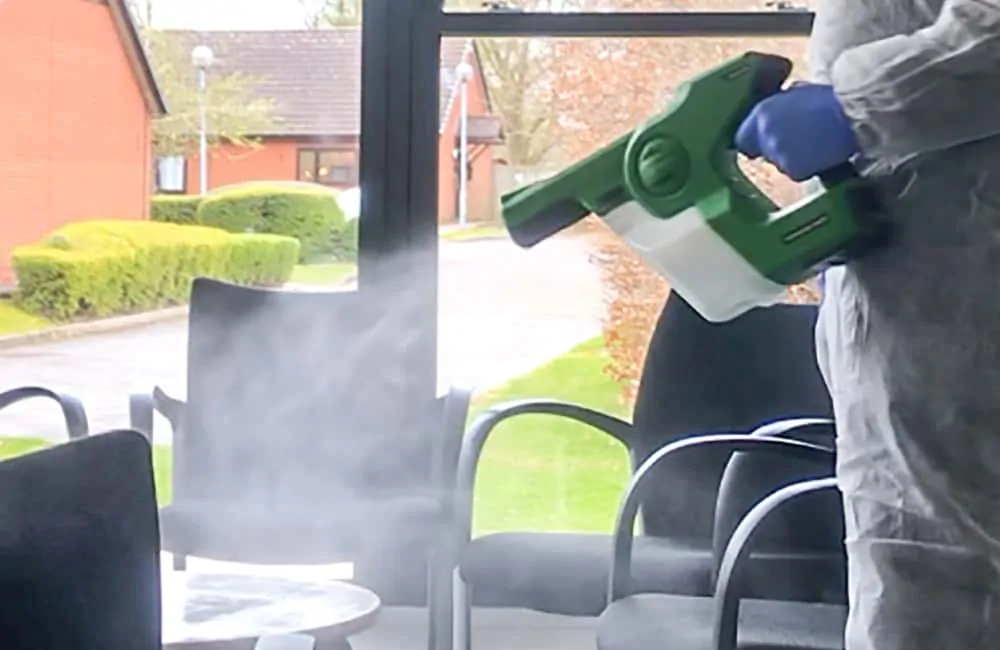
Professional office deep cleaning addresses areas that routine cleaning cannot reach effectively. It’s a detailed sanitisation with electrostatic spraying for comprehensive disinfectant coverage.
Frequency and Timing of Deep Cleaning
Most UK offices plan deep cleaning quarterly or biannually – frequency depends on your facility size, occupancy levels, and industry requirements. High-traffic or client-facing environments (such as healthcare or hospitality) may need it more frequently for compliance purposes (perhaps monthly or every six weeks). Deep cleans are best arranged outside working hours or during planned closures because technicians need full access to work effectively. A reputable provider will help build a timetable that suits your operations with minimal disruption.
What to Look for in a Deep Cleaning Partner
Deep cleaning isn’t just “more thorough cleaning.” It requires technical expertise, the right equipment, reliable service delivery and a clear understanding of UK health and safety standards.
Expertise and Experience
Office deep cleans require trained technicians who understand where contaminants hide, the right products for sensitive surfaces, and the correct process for office environments. Verify provider credentials through industry certifications and client testimonials. When reviewing a provider:
- Check their experience with commercial buildings, not just domestic work
- Ask for proof of staff training and/or qualifications
- Request examples of similar projects or client case studies
- Make sure they’re TR19 compliant and have public liability insurance.
Professional providers should demonstrate knowledge of UK workplace health regulations and provide evidence of successful compliance with COSHH requirements.
Cleaning Products and Equipment
Commercial offices require cleaning solutions that are effective but safe for workspaces with electronics, shared surfaces, and high footfall. At Deduct Ltd, for example, our deep cleaning and disinfection services meet even the most rigorous requirements of medical facilities, in full compliance with UK Health and Safety Executive (HSE) guidelines. Ask your provider about the disinfectants they use and their equipment.
Evaluating Costs and Service Packages for Office Deep Cleaning in the UK
Price matters, but what’s included in the price matters more. A cheap quote might hide shortcuts or an inexperienced team. Professional office deep cleaning UK providers offer transparent pricing that reflects comprehensive service delivery rather than basic cleaning tasks. Your assessment of the value of the service should consider the long-term benefits, including reduced sick days, improved air quality, no more bad odours and a better professional image.
Transparent Pricing
A professional deep cleaning provider should offer a detailed quote that breaks down the cost by task or area, itemising all services, materials and labour costs without hidden charges. They should also have conducted a site visit to assess your specific requirements before providing a quote. Be wary of quotes that seem unusually low (this might indicate corners being cut). The quote should specify:
- What’s included in the deep clean
- What’s considered an additional service
- Whether specialist methods (e.g., electrostatic spraying) incur extra charges
- Any restrictions, assumptions or optional add-ons.
Customised Cleaning Plans
Every office has unique cleaning requirements. A good partner will develop a customised plan based on your facility layout, occupancy patterns and specific hygiene requirements. Look for providers who:
- Conduct a full site assessment
- Ask about footfall, layout and high-risk zones
- Tailor the cleaning plan to your building’s needs
- Provide a clear timeline and expected outcomes.
Compliance and Quality Assurance Considerations
Deep cleaning has compliance implications. A provider should understand workplace health and safety and what UK law expects of employers.
Health and Safety Compliance
If a provider can’t produce documentation (such as insurance-compliant hygiene certificates) or seems unsure about safety procedures, that’s a sign to walk away. You should also only work with providers who have full public liability insurance (for your peace of mind). This protection extends to your business, covering potential damage or incidents during cleaning operations.
Client References and Reviews
Any provider can sound confident on the phone. – what matters is what their clients say. Client testimonials and case studies will give you insight into their service reliability. Request references from businesses similar to yours in size and industry sector. Most professional providers will happily share client contact information and case studies that demonstrate a successful long-term partnership. You can also read through their online reviews to get a sense of the company’s work ethic and service quality.
Your Office Deep Cleaning Checklist
Selecting the right team comes down to cost, service quality, proof, and trust. A good provider will communicate well from the start, explain their process in plain English, and take responsibility for delivering consistent results. You should see returns in improved workplace health. Professional deep cleaning contributes to employee well-being by removing allergens, bacteria, and other contaminants that standard cleaning cannot effectively address. This translates into reduced sick leave, improved productivity, and enhanced workplace satisfaction.
Use the points supplied in this guide to evaluate your provider on:
- The scope of their work
- Their technical capabilities
- Their approach to safety and compliance
- Their pricing transparency
- Their reliability and track record.
At Deduct Ltd, we understand the complexities of comprehensive deep cleaning and disinfection services, we therefore combine industry expertise with transparent pricing as well as flexible service delivery. We serve offices and commercial buildings across the UK, while ensuring compliance with UK health and safety regulations. Get in touch to arrange a site visit or discuss your office deep cleaning requirements.